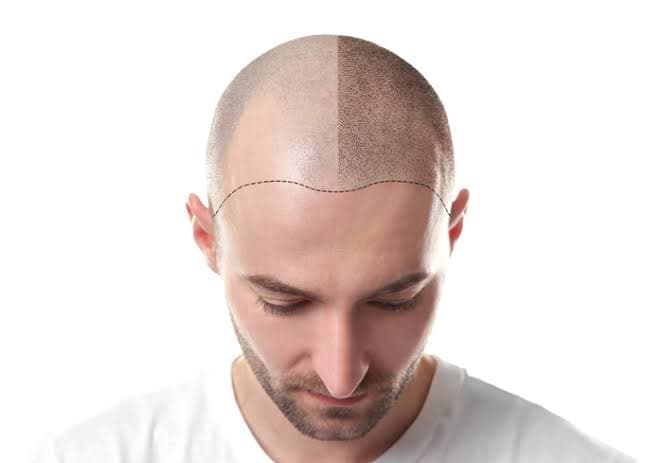
Androgenetic alopecia (male and female pattern baldness) is one of the most common cosmetic concerns brought to our clinic in Haldwani. Today's advanced Follicular Unit Extraction (FUE) techniques have made unnatural 'pluggy' hair transplants obsolete. When performed by a qualified plastic surgeon, hair restoration creates a soft, natural hairline with permanent follicular survival.
How Follicular Unit Extraction (FUE) Works
In FUE, individual follicular units containing 1 to 4 hairs are harvested one by one from the permanent donor zone at the back and sides of the scalp using micro-punches (0.75 mm to 0.9 mm in diameter). These grafts are genetically resistant to the DHT hormone that causes balding. Tiny recipient micro-slits are then created at precise angles and directions matching natural hair growth patterns, followed by meticulous graft placement.
| Norwood Stage | Pattern of Thinning | Approximate Grafts Needed | Session Duration | |
|---|---|---|---|---|
| Stage 2 | Mild fronto-temporal recession | 1,000 – 1,500 Grafts | 4–5 Hours | |
| Stage 3 | Deep temporal recession; early hairline loss | 1,500 – 2,200 Grafts | 5–6 Hours | |
| Stage 4 | Receding hairline plus vertex/crown thinning | 2,200 – 3,000 Grafts | 6–7 Hours | |
| Stage 5–6 | Extensive baldness with thin bridge remaining | 3,000 – 4,500 Grafts | Full day or 2 consecutive sessions |
The 12-Month Growth Timeline and 'Shock Loss'
Patience is essential in hair restoration. Around 2 to 6 weeks after transplantation, the newly placed hair shafts naturally shed while the underlying dermal papillae (follicle roots) enter a temporary resting telogen phase. This is entirely normal and expected. By month 3 to 4, fresh, permanent hairs begin sprouting. Full cosmetic density and natural maturation are achieved between months 9 and 12.
Post-Procedure Scalp Care
For the first 5 days, avoid touching or scratching the recipient grafts. We provide a specialized saline spray and gentle shampooing protocol starting on Day 3. Avoid wearing tight helmets or caps that rub against the newly transplanted area for at least 10 days, and protect the scalp from direct solar UV radiation during early healing.
Is an FUE hair transplant painful?
The procedure is performed entirely under local anesthesia. You may experience minor pinprick sensations during the initial numbing injections, but the entire harvesting and implantation phases are virtually painless. Patients comfortably watch television, listen to music, or take breaks throughout the session.
Why do transplanted hairs fall out after a few weeks?
This phenomenon, known as 'shock loss' or catagen transition, happens because the trauma of relocation prompts the hair shaft to shed while the microscopic follicle root remains securely anchored beneath the scalp, actively gearing up for permanent anagen growth.
Are the results of an FUE hair transplant permanent?
Yes. Grafts harvested from the occipital and temporal donor zones are genetically programmed to resist dihydrotestosterone (DHT) receptors, ensuring lifelong hair retention once established.
When can I return to work after surgery?
Most patients resume desk work within 3 to 5 days. Minor crusting around the grafts typically flakes away naturally between days 7 and 10.
Preferred Medical Sources & Clinical Citations
To uphold medical accuracy and scientific consensus, this clinical information is substantiated by peer-reviewed literature, plastic surgery journals, and certified surgical bodies.
- 1Follicular Unit Excision (FUE) Guidelines and Quality Standards— International Society of Hair Restoration Surgery (ISHRS), 2023
- 2Follicular Unit Extraction Hair Transplantation: Practice Guidelines— Journal of Cutaneous and Aesthetic Surgery, 2022