
Liposuction
Surgical removal of stubborn fat from specific areas to change body shape — not a weight-loss treatment.
What is Liposuction?
Liposuction removes fat from beneath the skin through small incisions, using a cannula and suction. It is a contouring operation: it changes the shape of an area, and it is chosen because a specific region — the flanks, the lower abdomen, the outer thighs, the submental area under the chin — has not responded to diet and exercise the way the rest of the body has. It is not a weight-loss procedure, and treating it as one is the single most common source of disappointment.
Dr. Sarika Gangwar performs tumescent liposuction at Chandan Hospital, Haldwani, using power-assisted technique where it improves the smoothness of the result.
Why is Liposuction Needed?
Fat distribution is largely genetic and does not respond evenly to weight loss. Two people at the same weight and body fat percentage can carry it very differently, and for some people a specific deposit persists at any weight they reach through diet alone. Liposuction addresses that specific problem. It is worth being explicit about what it cannot do: it will not treat obesity, it does not remove visceral fat around the organs, it does not tighten loose skin, and it is not a substitute for the conditions that cause weight gain.
Patients whose main concern is excess skin rather than excess fat are usually better served by a tummy tuck or a body lift, and will be told so.
Who is Eligible?
- Adults at a stable weight, generally within about 30% of ideal body weight
- Good skin elasticity — skin needs to contract over the new contour
- Stable weight for at least 6 months before surgery
- Localised fat that has persisted despite genuine diet and exercise
- Non-smokers, or able to stop for at least 4 weeks before and after
- Realistic expectation: contour change, not a change in the number on the scale
Who is not a suitable candidate?
Liposuction is not appropriate for everyone. You should not proceed, or should discuss alternatives, if any of the following apply:
- Obesity — body mass index over about 30 — where weight management is the appropriate first step, not surgery
- Significant loose or inelastic skin, which liposuction will not tighten and may make more visible
- Women who are pregnant or planning pregnancy in the next year
- Uncontrolled hypertension, diabetes, or heart disease
- Bleeding disorders or therapeutic anticoagulation that cannot be safely paused
- Active infection, or a history of deep vein thrombosis or pulmonary embolism
- Current smoker who cannot stop — smoking materially increases skin necrosis risk
- Expectation of weight loss, or of a result that the underlying skin quality cannot hold
The Procedure — Step by Step
Assessment
Fat distribution, skin quality and elasticity are assessed area by area, along with your weight history. Skin quality is the deciding factor in whether liposuction alone will give a good result or whether skin removal is also needed.
Tumescent Infusion
A large volume of dilute local anaesthetic and adrenaline solution is infiltrated into the fat. This firms the tissue, dramatically reduces bleeding and bruising, and provides post-operative pain relief. It is the reason modern liposuction is far safer than the older dry techniques.
Fat Removal
A thin cannula is inserted through small incisions, typically 3 to 5 mm. Power assistance vibrates the cannula to break up fat more efficiently. Fat is removed in a controlled, layered pattern rather than from a single cavity.
Contouring and Symmetry
The treated area and its counterpart on the other side are compared repeatedly during the procedure. Leaving a smooth transition at the edges of the treated zone matters more to the final appearance than the absolute volume removed.
Closure and Compression
Incisions are left open or loosely closed to allow fluid drainage. A compression garment is fitted immediately and worn continuously for the first weeks.
Recovery Timeline
Days 1–3
Bruising, swelling and soreness across the treated areas, managed with the medication given. The compression garment is worn continuously except for showering. Expect fluid leakage from the incision sites during the first 24 to 48 hours — this is normal.
Weeks 1–2
Most people are comfortable enough to return to desk work within 3 to 7 days. Walking is encouraged from day one to reduce clot risk. The garment continues full-time; swelling begins to settle but fluctuates through the day.
Weeks 3–6
Bruising has usually resolved. Light aerobic exercise from around week 3, with medical clearance. The result is already visible but not yet final — the contour continues to change as swelling resolves.
Months 3–6
The final contour establishes itself and the skin contracts over it. Some firmness and lumpiness under the skin is normal during this period and generally settles. Compression is usually reduced to part-time and then stopped.
Beyond 6 months
Results are stable provided weight remains stable. Fat cells removed at surgery do not come back, but the fat cells that remain can still enlarge with weight gain.
Expected Results
A smoother, better-proportioned contour in the treated areas, with a more defined waistline or a flatter abdomen depending on the region. The change is permanent in the sense that the removed fat cells do not regenerate — but the remaining fat cells can still enlarge, so significant weight gain will blur or reverse the result. Expect the change to be about shape, not scale weight.
Most patients lose a modest amount of weight at surgery and should not plan around losing more.
What are the risks and complications?
Every surgical procedure carries risk. These are the ones most relevant to liposuction, and how they are managed:
Contour irregularity
The most common complaint after liposuction. Depressions, ridges or asymmetry can occur, especially when large volumes are removed or when the skin is inelastic. Many settle over 3 to 6 months; some do not, and may need a touch-up.
Loose or sagging skin
Liposuction removes volume but does not tighten skin. Where skin elasticity is poor, the result can be a deflated or hanging appearance — worse in some cases than before surgery. This is the main reason skin quality is assessed carefully beforehand.
Seroma
A collection of fluid under the skin, fairly common after larger-volume liposuction. Often resolves on its own; sometimes needs to be drained with a needle.
Infection
Uncommon, because the tumescent fluid contains local anaesthetic and the technique is performed under sterile conditions. Fever, spreading redness or increasing pain should be assessed promptly.
Deep vein thrombosis and pulmonary embolism
Rare but the most serious risk. A clot forming in the leg veins can travel to the lungs. Prolonged immobility, dehydration and a personal or family history of clotting all raise the risk, which is why early mobilisation is insisted upon.
Bruising and prolonged swelling
Essentially universal, and much of what looks like a poor early result is simply swelling. Bruising typically resolves in 2 to 3 weeks; swelling takes 3 to 6 months to settle completely.
Numbness and altered sensation
Common over treated areas and usually temporary, though it can take many months to return fully and may be permanent in patches.
Fat embolism
Very rare, but a recognised and potentially fatal complication in which fat enters the bloodstream. Another reason volume per session is capped.
Safety & Quality Assurance
Modern liposuction is a considerably safer operation than the techniques used in the 1990s, largely because of the tumescent method: infiltrating dilute adrenaline before removing fat reduces blood loss and bruising substantially. Safety at higher volumes depends mainly on two things — total volume removed in one session, and the fluid balance managed during and after surgery.
Volume is capped per session in line with recognised guidance, and large-volume cases are staged across more than one operation rather than pushed through in a single sitting.
Deep vein thrombosis prevention is taken seriously, since liposuction patients are often in the risk group: early mobilisation is encouraged, compression is used, and your personal clot risk is assessed before surgery.
When should you seek urgent care?
Contact the clinic straight away, or attend an emergency department if the clinic is closed, if you notice any of the following after liposuction:
- Calf pain, swelling or tenderness in one leg — possible deep vein thrombosis
- Shortness of breath, chest pain, or coughing blood — possible pulmonary embolism; seek emergency care immediately
- Fever above 38°C, or increasing redness, warmth or foul-smelling discharge from an incision
- Rapidly worsening swelling or pain in one area, particularly if the skin over it looks dusky
- Passing very little urine, feeling faint, or persistent vomiting
Frequently Asked Questions about Liposuction
Usually very little, and that is not what the procedure is for. Liposuction changes the shape of an area rather than overall weight. Patients are advised not to plan around weight loss, and the scale may barely move even when the visible contour change is significant. If losing weight is the goal, that is a separate matter to address first.
In part. Male chest enlargement caused by glandular tissue needs surgical excision of that tissue, which liposuction alone will not remove. Where the prominence is mainly fatty, liposuction can help. Most gynecomastia surgery combines both techniques.
Small areas can be done under local anaesthesia with sedation. Most cases, and any case involving multiple areas, are done under general anaesthesia at Chandan Hospital with an anaesthetist present.
It depends on total volume rather than the number of areas. Safety guidance caps how much fat is removed and how much fluid is used in a single operation, so treating many areas at once is possible only up to that limit. Beyond it, the session is split into two operations several months apart.
The fat cells removed are gone permanently and do not regenerate. What can happen is that the remaining fat cells enlarge with weight gain, which may blur the contour. This is why weight stability is the main thing that protects the result long term.
Yes, and the combination is common when there is both excess fat and loose skin with separated abdominal muscles. Combining them adds operating time and recovery burden, so it is planned deliberately rather than added on. A tummy tuck alone may be the better single operation where skin is the main problem.
Healthy, elastic skin contracts over the new contour over several months. Skin that has lost elasticity — after pregnancy, significant weight loss, or with age — contracts much less, and may then sag. This is assessed before surgery, because it determines whether liposuction is the right operation at all.
Related Procedures You May Be Interested In
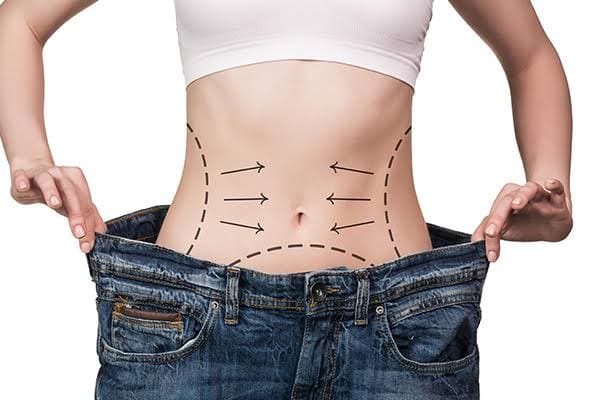
Tummy Tuck
Abdominoplasty — removal of excess abdominal skin with repair of separated abdominal muscles.
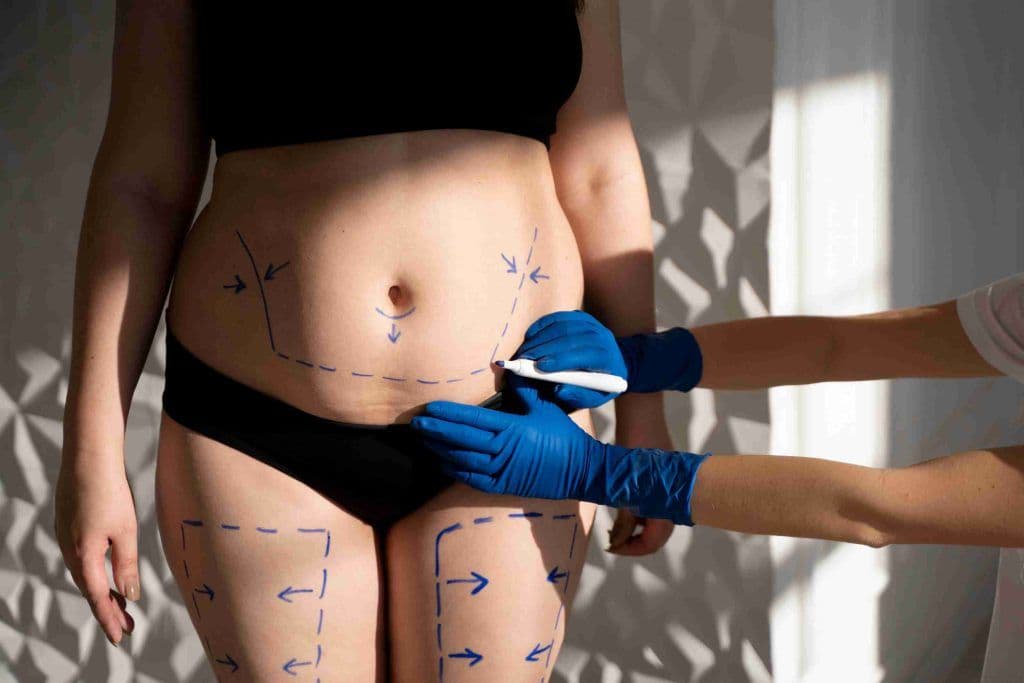
Body Lift
Remove excess sagging skin from the abdomen, thighs, and buttocks after major weight loss.
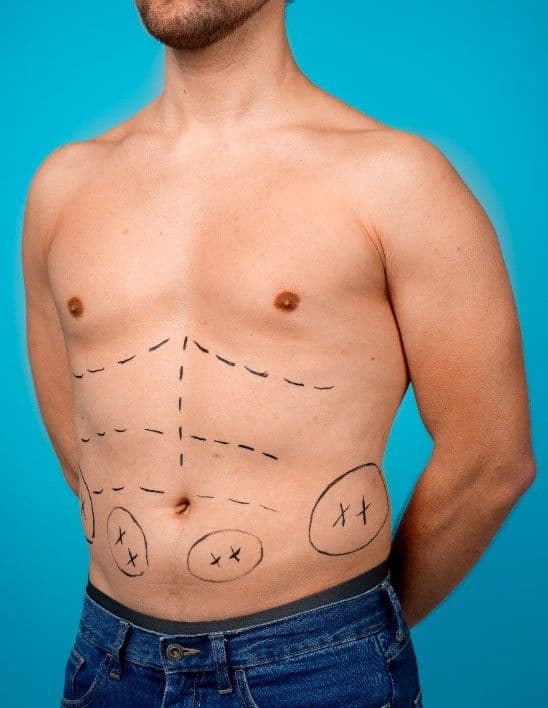
Abdominal Etching
Sculpt visible six-pack abs through precision liposuction — the athletic body you've always wanted.
Explore More
Browse All Our Services
Dr. Sarika Gangwar offers a comprehensive range of plastic and cosmetic surgery procedures in Haldwani, Uttarakhand.
View All ServicesInterested in Liposuction?
Book a private, no-obligation consultation with Dr. Sarika Gangwar to discuss your goals and learn what's possible.