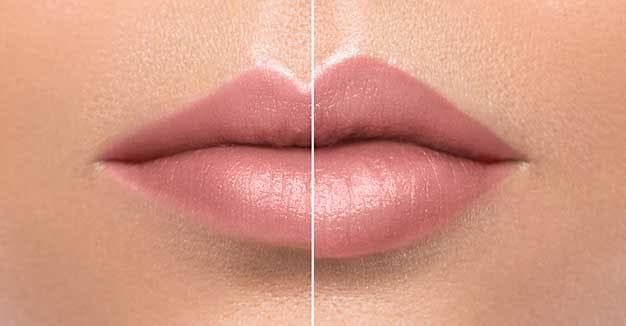
Lip Enhancement / Reduction
Surgical and non-surgical options to increase lip volume, or to reduce lips that feel too full for the face.
What is Lip Enhancement / Reduction?
Lip surgery covers two opposite requests. Enhancement adds volume, using hyaluronic acid filler, autologous fat transfer, or a lip lift that shortens the space between nose and upper lip. Reduction removes tissue from lips that are disproportionately large for the face — a request that is far more common than most clinics acknowledge, and one with a different set of technical problems.
The correct choice is not simply a matter of preference. Filler is temporary and low-risk. Fat transfer is longer lasting but unpredictable in how much survives. A lip lift changes the relationship between the nose, lip and teeth, and leaves a scar, however discreet. Surgical reduction is permanent and irreversible.
Dr. Sarika Gangwar offers all four at Healthscapes Clinic, Haldwani, and will say plainly when a request is better served by the least invasive option — or by none of them.
Why is Lip Enhancement / Reduction Needed?
The lips anchor the lower third of the face. When they are thin relative to the nose and chin, the face can read as older than it is, because lip volume naturally decreases with age. When they are very full relative to the rest of the face, the lip can dominate in a way that draws attention away from the eyes. Both are matters of proportion rather than absolutes, which is why the assessment looks at the whole lower face rather than the lips alone.
It is worth being clear that this is an elective aesthetic procedure. Nothing here is medically necessary, and the honest position is that the risks — however small — are only worth accepting for a change you actually want.
Who is Eligible?
- Adults, generally 18 or older
- Healthy, intact lip tissue with no active infection
- For a lip lift: adequate tooth show and a nose-lip distance that is genuinely long
- Filler patients: no history of severe reaction to hyaluronic acid
- Clear understanding of which options are reversible and which are not
Who is not a suitable candidate?
Lip Enhancement / Reduction is not appropriate for everyone. You should not proceed, or should discuss alternatives, if any of the following apply:
- Active cold sores (herpes labialis) or any oral infection — surgery or filler must wait until it has fully resolved
- Pregnancy or breastfeeding, for both filler and surgery
- History of anaphylaxis or severe allergy to hyaluronic acid or lidocaine
- Autoimmune or connective tissue disease affecting the lips
- Currently taking blood-thinning medication that cannot be paused, or a bleeding disorder
- Poorly controlled diabetes, which raises infection and healing risk
- Existing filler in the lips from within the last two weeks
- Unrealistic expectations, including a request for a specific lip seen on someone else whose anatomy differs
The Procedure — Step by Step
Assessment and Decision
The lower face is assessed as a whole — lip height and projection, the distance from nose to upper lip, tooth show, and how the lips sit against the chin. The technique follows from that assessment, not from preference alone. You are told which results are permanent and which are not before anything is booked.
Anaesthesia
Filler and fat transfer are done under local anaesthesia, with optional sedation. A lip lift and surgical reduction are usually done under local with sedation, and occasionally general anaesthesia.
The Procedure
Filler: hyaluronic acid placed in the body of the lip. Fat transfer: fat harvested from the abdomen or flank, purified, and injected. Lip lift: a controlled strip of skin is removed from beneath the nose to roll the upper lip outward. Reduction: a carefully measured strip of lip tissue is excised from the inner surface to preserve the natural lip border.
Closure and Aftercare
Sutures are dissolvable and placed inside the lip line wherever possible. Filler patients leave with no sutures at all. Antiviral treatment is given where there is a history of cold sores, because surgery can trigger an outbreak.
Recovery Timeline
Filler — 1 to 3 days
Swelling and an over-filled appearance for the first 24 to 48 hours. This settles quickly. Bruising around the injection points is common and fades within a week. Most people return to work the next day.
Filler — 2 weeks
Final volume is visible. Hyaluronic acid is the only option here that can be substantially dissolved, so an over-correction is correctable rather than permanent.
Fat transfer — 1 to 2 weeks
More swelling than filler, and a longer settling period. Expect roughly a third of the transferred volume to be reabsorbed over the first three months; what remains is generally long-lasting.
Lip lift / reduction — 2 to 6 weeks
Swelling settles over two to three weeks. Suture lines are pink and firm at first and mature over six to twelve months. Speaking and eating normally is usually comfortable within a week.
All surgery — 6 to 12 months
Scars mature and soften. Final position of the lip border and the fullness of the lip should be judged at six months, not six weeks. Sun protection on the scar matters throughout this period.
Expected Results
For enhancement: more volume in proportion with the nose and chin, achieved conservatively — building up over two sessions generally looks better than one large volume in a single sitting. For reduction: lips that sit in balance with the rest of the face rather than dominating it.
Filler results last roughly 6 to 18 months depending on the product and how quickly you metabolise it. Fat transfer and surgical procedures are permanent.
Sensation in the lips is usually normal within a few weeks, though temporary numbness is common.
What are the risks and complications?
Every surgical procedure carries risk. These are the ones most relevant to lip enhancement / reduction, and how they are managed:
Vascular occlusion (filler)
Rare but serious. Filler blocks a blood vessel and the skin it supplies is starved of blood, which can cause tissue death and, in the worst case, blindness. Treated immediately with hyaluronidase. This is the single strongest argument for choosing an experienced injector over a cheaper one.
Asymmetry
The most common complaint after every lip procedure. Lips are not perfectly symmetrical before treatment, and filler or fat does not distribute perfectly evenly. Minor asymmetry is normal and usually correctable.
Over- or under-correction
For filler this is fixable — it can be dissolved. For fat transfer and surgical procedures it is not, which is the main reason to be conservative with permanent techniques.
Infection and cold sore outbreak
Any breach of the lip can introduce infection or reactivate latent herpes simplex. Antiviral cover reduces the second risk considerably.
Scarring
Relevant to the lip lift and to surgical reduction. Incisions are placed inside the lip or along the natural border, but a lip lift leaves a scar beneath the nose that is visible on close inspection, and it is permanent.
Altered sensation or function
Temporary numbness is common. Persistent numbness, difficulty pursing the lips, or changes to speech are uncommon but possible after surgical procedures.
Fat reabsorption (fat transfer)
A significant proportion of transferred fat does not survive. The amount varies between patients and cannot be predicted exactly, so a single session may not reach the planned result.
Safety & Quality Assurance
The lips are among the most vascular areas of the face, and injectable filler carries the rare but serious risk of vascular occlusion — filler entering an artery and blocking blood supply to the skin. This is why filler should only be placed by someone trained to recognise and treat it, with hyaluronidase available on site.
Surgical reduction is irreversible, so measurements are taken carefully and conservatively; removing too much tissue cannot be undone. Antiviral cover is given where there is a history of cold sores, since surgical trauma reliably triggers outbreaks in those patients.
Every option here is elective, and the threshold for proceeding should be that the change is genuinely wanted, not merely available.
When should you seek urgent care?
Contact the clinic straight away, or attend an emergency department if the clinic is closed, if you notice any of the following after lip enhancement / reduction:
- Severe pain in or around the lips, or pain that is worsening rather than settling
- Whitening, mottling or dusky discolouration of the lip skin — this may indicate impaired blood supply and needs immediate attention
- Any change in vision, or sudden severe eye pain, after filler
- Fever, spreading redness, or pus from an incision
- Cold sore outbreak spreading across the lip, or blistering around the eyes
Frequently Asked Questions about Lip Enhancement / Reduction
Filler adds volume to the lip itself. A lip lift removes a strip of skin between the nose and the upper lip, which shortens that distance and rolls the lip outward so more of it is visible. Filler suits thin lips; a lip lift suits lips that already have volume but sit low, with a long space between nose and lip.
No. Surgical reduction removes tissue permanently. This is why it is planned conservatively and why a first procedure deliberately leaves room to remove slightly more later if needed — it is much easier to do a second small reduction than to correct an over-reduction.
Typically 6 to 18 months, depending on the product used, the volume placed, and how quickly you metabolise hyaluronic acid. Areas that move constantly, like the lips, tend to break filler down faster than areas that do not.
Partly. Fat transfer is longer lasting than filler, but not all the transferred fat survives — often around two thirds. The surviving fat is generally permanent. Because the survival rate is variable, results are planned over more than one session where a larger change is wanted.
Filler is done with local anaesthetic cream and often a local block, so most patients describe pressure rather than pain. Surgical procedures are performed under local anaesthesia with sedation. The first two days afterwards are the uncomfortable part — swollen, tight and tender — and this settles quickly.
Sometimes. The nose and lips are adjacent and their proportions affect each other, so there is a case for planning them together. They are not usually performed in the same session, but the plan for one is made with the other in mind.
Yes — filler, fat transfer, lip lift and surgical reduction are all offered by Dr. Sarika Gangwar at Healthscapes Clinic, Haldwani. Not every option is right for every patient, and the consultation is where that is worked out.
Related Procedures You May Be Interested In

Rhinoplasty (Nose Job)
Nose reshaping surgery for proportion, symmetry and — where needed — improved nasal airflow.

Chin Correction
Sculpt a stronger, more balanced chin profile with genioplasty or chin implants.
Face Lift
Turn back the clock with a natural-looking face lift that restores youthful contours and tightens sagging skin.
Explore More
Browse All Our Services
Dr. Sarika Gangwar offers a comprehensive range of plastic and cosmetic surgery procedures in Haldwani, Uttarakhand.
View All ServicesInterested in Lip Enhancement / Reduction?
Book a private, no-obligation consultation with Dr. Sarika Gangwar to discuss your goals and learn what's possible.